
Verona · Romeo & Juliet
The Letters to Juliet: Verona's Most Romantic Tradition
For almost a century, letters addressed simply to "Juliet, Verona" have found their way to the city of Romeo and Juliet. Some ask for advice. Some confess heartbreak. Some arrive from across the world with no street address at all. Yet in Verona, we do not ignore them. They are answered.
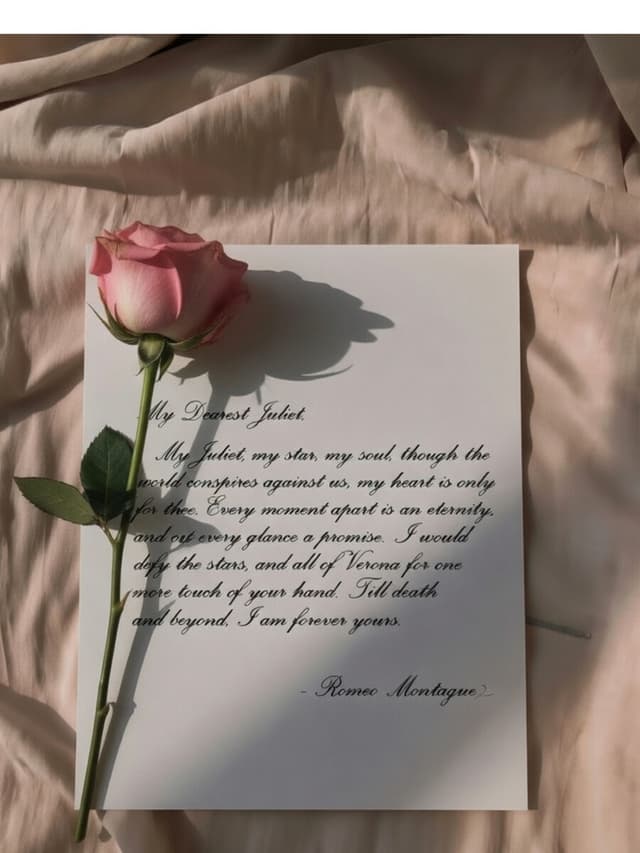
Verona Official Information: Juliet's Letters.
- Official Handling Organization
- Il Club di Giulietta (The Juliet Club)
- Casa di Giulietta Entrance Address
- Piazza Viviani 10, 37121 Verona VR, Italy
- Juliet's Tomb Location
- Via Luigi da Porto, 5, 37121 Verona VR, Italy
- Historical Inception Year
- 1930s (Informally) / 1970s (Civic formalization)
- Annual Volume Estimate
- Over 50,000 letters processed globally
- Original Standard Address Format
- Giulietta, Verona, Italy

History of Juliet's Letters
- 1Why do people write letters to Juliet?
- 2Who was the first secretary of Juliet?
- 3How did Juliet's letters begin?
- 4Why did Ettore Solimani answer the letters?
- 5How famous did Juliet's secretary become?
- 6What happened after Solimani retired?
- 7What kinds of letters does Juliet receive?
- 8Why is Verona connected to Juliet's letters?
- 9Can visitors still follow the path of Juliet in Verona?
- 10The legacy of Juliet's secretaries
Why do people write letters to Juliet?
For generations, visitors and distant romantics have written letters addressed to "Juliet, Verona." Over time, these letters became one of our city's most unusual and enduring love traditions.
There was no advertisement, no official campaign, no invitation carved into stone. The letters came because people felt they could share with Juliet things they could not say aloud.
Perhaps it began through whispers among travelers. Perhaps one broken-hearted visitor told another. Perhaps our city of Verona itself, with its balconies, courtyards, church bells, and pale stone streets, called to the world: send us your words, your feelings, your love, pain and dreams.
And so the letters came. They came from nearby France and Germany. They came from England, Finland, Brazil, Sweden, the United States, India, China, Saudi Arabia, and beyond. They came in different languages, in careful handwriting, in desperate script, in envelopes addressed only to Giulietta, Verona.
In another city, they might have been discarded as undeliverable. In Verona, someone opened them.
Who was the first secretary of Juliet?
Ettore Solimani, a World War I veteran and municipal custodian who worked near Juliet's Tomb, was the first "secretary of Juliet." Verona would not be Verona without him. Beginning in the 1930s, he started reading and answering letters sent to Juliet, creating a tradition that later became famous around the world.
Solimani was not a poet by profession. He did not set out to become part of a legend. He worked a humble municipal job as custodian of Juliet's Tomb — not at today's Casa di Giulietta or Juliet's Balcony, but at the older site associated with the tragic heroine.
At first, the letters simply arrived. They piled up in the office near the tomb. Some were addressed to Juliet Capulet. Some to Giulietta, Verona. Some seemed to belong to no real postal system at all, except the invisible geography of longing.
Solimani read them. And then, moved by what he found, he began to answer.
A 1957 article described the world that surrounded him: letters that were naive, desperate, tender, written by young women asking Juliet for help, by abandoned men, by people who wanted to leave "a flower, a prayer, or a secret" at the tomb.
How did Juliet's letters begin?
The earliest known wave of letters to Juliet began in the 1930s. By 1937, Solimani was already associated with the letters arriving at Juliet's Tomb, and his municipal office became informally known as a place where love letters could be brought, read, and answered.
The tradition grew in that beautifully Italian way: unofficially, emotionally, and because somebody decided the human thing mattered more than the bureaucratic thing.
The post office might have had every reason to return such letters. The municipality might have ignored them. A clerk might have stamped them unknown. Instead, Verona made room for them.
By the late 1970s, Corriere della Sera remembered Solimani as the man behind the phrase "your Juliet." The article explained that letters addressed to Juliet could not truly be returned as unknown, because Solimani had made himself their reader, interpreter, and respondent. His office became known, almost mythically, as an "office of love."
Why did Ettore Solimani answer the letters?
Ettore Solimani answered Juliet's letters because he believed the writers deserved to be heard. He did not seek fame or extra pay. His replies were acts of kindness, written to people who had trusted Verona with their private hopes, disappointments, and impossible loves.
What makes Solimani's story so moving is that it was not efficient. It came from the heart, and showed that Juliet's spirit lives on in Veronese people.
He answered because the letters had weight. They were not simply fan mail to a fictional character. They were confessions from people who felt that Juliet — the young woman who loved absolutely, suffered deeply, and became immortal through tragedy — might understand them.
Some letters asked for advice. Some asked for blessing. Some asked for courage. Others simply needed a witness. Solimani became that witness. His gift was not that he solved every love story. It was that he treated each one as real.
How famous did Juliet's secretary become?
Ettore Solimani became internationally known as Juliet's secretary. Newspapers throughout Italy reported that he was honored for his service, recognized abroad, and remembered in countries including England, Finland, Brazil, Sweden, and the United States for his unusual role in Verona's romantic legend.
In 1956, Il Gazzettino reported that Solimani received an official state honor for his long service promoting Verona's fame. The article called him the "secretary of Juliet" and described how, for many years, he welcomed visitors and handled delicate emotional situations at the tomb.
This was not fame in the ordinary sense. Solimani was not an actor, politician, or writer of bestsellers. He became known because he stood at the meeting point between myth and real life.
People came to Verona for Shakespeare. They found Solimani. And through him, Juliet seemed to answer.
What happened after Solimani retired?
After Ettore Solimani retired, the tradition of answering Juliet's letters continued. Volunteers and later organized teams carried on the work, reading letters from around the world and replying in Juliet's name to people seeking comfort, advice, or hope.
By the 1990s, the tradition had grown into a more organized civic effort. A 1993 New York Times article described an evolving team of Juliet's secretaries, including local citizens and international university students from Mexico, Japan, China, and Georgia, who read the heroine's mail and signed their replies as "Juliet's Secretary."
In that very year, the workload transitioned to a dedicated volunteer organization known as Il Club di Giulietta (The Juliet Club), spearheaded by Giulio Tamassia. Tamassia systematically mobilized translators and volunteers to handle the exploding influx of letters, ensuring that the historical ritual was preserved under a modern infrastructure.
The numbers had become extraordinary. The record reports that around 2,000 letters had arrived in that year alone. Many came from outside Italy. Most were written by women. A small number were even addressed to Romeo, though Juliet still replied. The letters had become global, but the emotion remained intimate.
“People write to Juliet as a friend. They look to her for words of comfort.”
What kinds of letters does Juliet receive?
Juliet receives letters about heartbreak, distance, forbidden love, family disapproval, loneliness, marriage, betrayal, and hope. Writers often ask for advice, but many simply want to tell their story to someone who will not laugh at them.
One person asks whether to wait. Another asks how to forget. Another wonders whether love can cross countries, religions, family expectations, or prison walls. Some letters are dramatic. Some are shy. Some are almost childlike. Others are wise enough to know that there may be no answer.
But Verona answers anyway.
In the 1993 New York Times article, one secretary observed that different countries seemed to write with different emotional tones: the German and Turkish letters were often serious and reflective; the Latin American letters were highly passionate; while some letters from other regions were playful, full of impossible dreams and high-spirited invitations. It receives the world, but always one heart at a time.
Why is Verona connected to Juliet's letters?
Verona is connected to Juliet's letters because the city has preserved physical places linked to the Romeo and Juliet legend: Juliet's House, Juliet's Balcony, and Juliet's Tomb. These places gave visitors somewhere tangible to leave emotions inspired by Shakespeare's story.
Casa di Giulietta gives the romance a balcony. Juliet's Tomb gives it a place of mourning. The letters give it a voice. And between those places, over many decades, Verona created something rare: a ritual of romance and tenderness. Casa di Giulietta is worth it to visit alone because Verona embraces you with these feelings, answers your emotions and quiet ponderings.
Can visitors still follow the path of Juliet in Verona?
Visitors can retrace the historic "Way of Juliet" directly through the UNESCO-listed historic center of Verona. This walk allows travelers to step between two distinct chapters of the literary legend:
The Staging Ground — Casa di Giulietta
Accessed via Piazza Viviani 10, this site brings you directly into the famous 14th-century courtyard hosting the iconic Gothic balcony, the celebrated bronze statue, and the high-traffic walls where physical notes are left by travelers.
The Transit Path
From Piazza Viviani, the route moves south for 1.2 kilometers, guiding walkers through the open expanse of Piazza Bra, tracing along the preserved historic Roman walls.
The Sanctuary — Juliet's Tomb
Hidden away inside the cloister of San Francesco al Corso along Via Luigi da Porto, 5, this destination marks where the writing tradition officially began. It remains a much quieter, deeply reflective environment where letters are read, curated, and answered by the club today.
Retracing this 15-minute path turns Verona from a simple sightseeing stop into a physical journey through the narrative arc of the tragedy — moving from the vibrant energy of youthful courtship to the quiet afterlife of the legend.
The legacy of Juliet's secretaries
The letters to Juliet are not just a tourist tradition. They are proof that people still look for tenderness in the world, and that our Verona, chose to answer. Today we receive over 50,000 letters a year.
It would have been easy for the first letters to disappear. It would have been easy for a municipal worker to say, "This is not my job." It would have been easy for the city to treat them as a curiosity, then as clutter.
Instead, Ettore Solimani opened them. He read them. He answered them. Giulio Tamassia and the modern Juliet Club organized them. Juliet's volunteers follow them today.
And because of that, Juliet did not remain only a character in a tragedy. In Verona, she became something gentler and stranger: a listener.
For nearly a century, people have written to Juliet because love can make everyone feel far from home. Verona's answer has always been simple: Write anyway. Juliet is listening.
Before you leave for your Casa di Giulietta entry, write your letter for Juliet with a return address and you will receive a reply.
Visit Juliet's Balcony
Book your entry to Casa di Giulietta online — walk-up tickets are not available.
Book Tickets →Tickets
Full Ticket (Balcony view)
€19 adult · Child <5yr (Free) free
Courtyard Ticket
€12 adult · Child <5yr (Free) free